
Image as Indicator
Fashion and its (necessary?) Sameness

At times I feel like an outsider to all of the fashion content I consume on Substack. I believe my training as a historian compounds this as I try to contextualize what I’m observing in culture against the backdrop of what has come before. I’ve been marveling over the past few months at how many articles, outfit pics, and “vibes” all feel incredibly similar, yet the people are eating it up and asking for more. I’m not the only one noticing, as right around the start of fashion month various essays popped up about the “Sameness” or “flattening” of current fashion, sometimes equated with quiet luxury (see Emma Evatt’s take here) and often equated with effortlessness. I see this but I also have to wonder, is all this Sameness a product of our digital era or a natural, even historic outcome of the fashion cycle?
Here’s my very quick take...
It would be impossible to think of fashion in our current day without thinking of the pervasive imagery of social media; targeted ads, video campaigns, influencer shopping hauls, all inescapable across TikTok, Instagram, and Pinterest. Fashion writers crowd Substack sharing their mirror outfit pics alongside affiliate links. This phenomenal collection of fashion imagery and inspired trends doesn’t spring out of nowhere and is rooted in a history that stretches back to the 1500s. Fashion as portrayed by duplicated images originated through the medium of illustration, and then as technology developed, photography. Fashion historian Sarah Goethe-Jones writes:
“The majority of fashion illustrations were created to be seen on a page at close range, allowing for the personal experience associated with books and letters. Therefore, fashion illustrations possess a unique feeling of intimacy, with the image held in the viewer’s hand, as well as an urgency, the need to stop us in our tracks before we turn the page.”
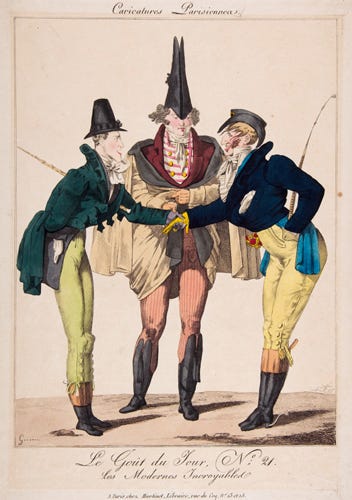
In this we see hundreds of years worth of maintenance surrounding the intention for fashion imagery to be extremely personal as well as portable. In our modern day our phones serve as a substitute to the paper or print magazine that used to be the sole communicators of a fashion image. Now, though, there are algorithms at play, feeding us constant editorial images and targeted ads designed to make us feel unique and fashionable, able to accrue good taste with the simple click of a checkout button. We no longer pick and choose which fashion imagery to consume, at least not as often as we may think.
It’s been noted across social media that this constant access to fashion images has begun to work itself out in a flattening of personal style and a singularity in that which is considered fashionable. This is best seen in a viral photo from November 2024 in which a group of women was photographed during a night out in Alabama all wearing a black shirt and denim jeans. Writer Carter Davis Johnson described the phenomena as a “frightful sameness.” He writes:
“... the dominant attitude of modernity is built on sameness and this sameness forces the beauty and the weirdness of the world into an ‘it’. There is no texture.”
As we see from historic examples, such as those used by Goethe-Jones, the fashion image has always been about Sameness to a degree; exclusive, yet always adhering to a set of acquirable codes.1 And those who follow the codes can succeed in achieving the “look” and fitting in with others who also adhere to the same aesthetic. We see this in more obvious ways with the outworking of subcultures and the way high fashion appropriates and waters down said subcultures to create its own exclusive image to be adhered to— a blatant example being Vivienne Westwood and the elevation of Punk from the street to runway. You can be drastically different from the mainstream, but still fall in line with the idea of Sameness.
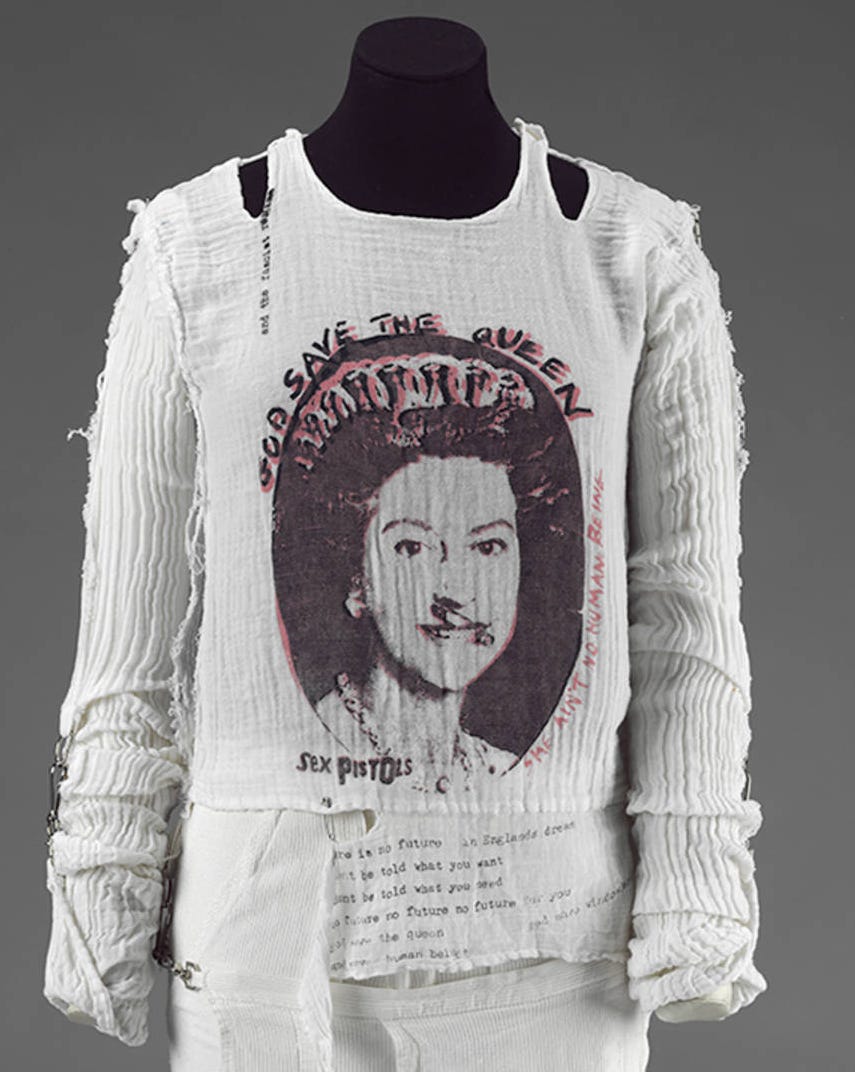
More people than ever in history have access not only to fashion images, but with the juggernaught that is fast fashion, all different price points to meet the modern expectations for getting dressed. Fashion inherently proves that the Sameness it demands through ceaseless images doesn’t have to be boring. But it seems at this current moment, Sameness is being equated with the quotidian, or to be more stark, blankness.
One of my favorite Anne Hollander quotes applies well as I think about the imagery we consume:
“The eye is full of lust for change and for certain changes of a certain time. There’s always an influx of practicality into fashion — all of a sudden, we must all wear blue jeans — but then people suffer from visual indigestion, and a surfeit of one type of thing brings us the delight in the opposite. But the appeal is constantly to the eye, I would say.” — Anne Hollander (1978)
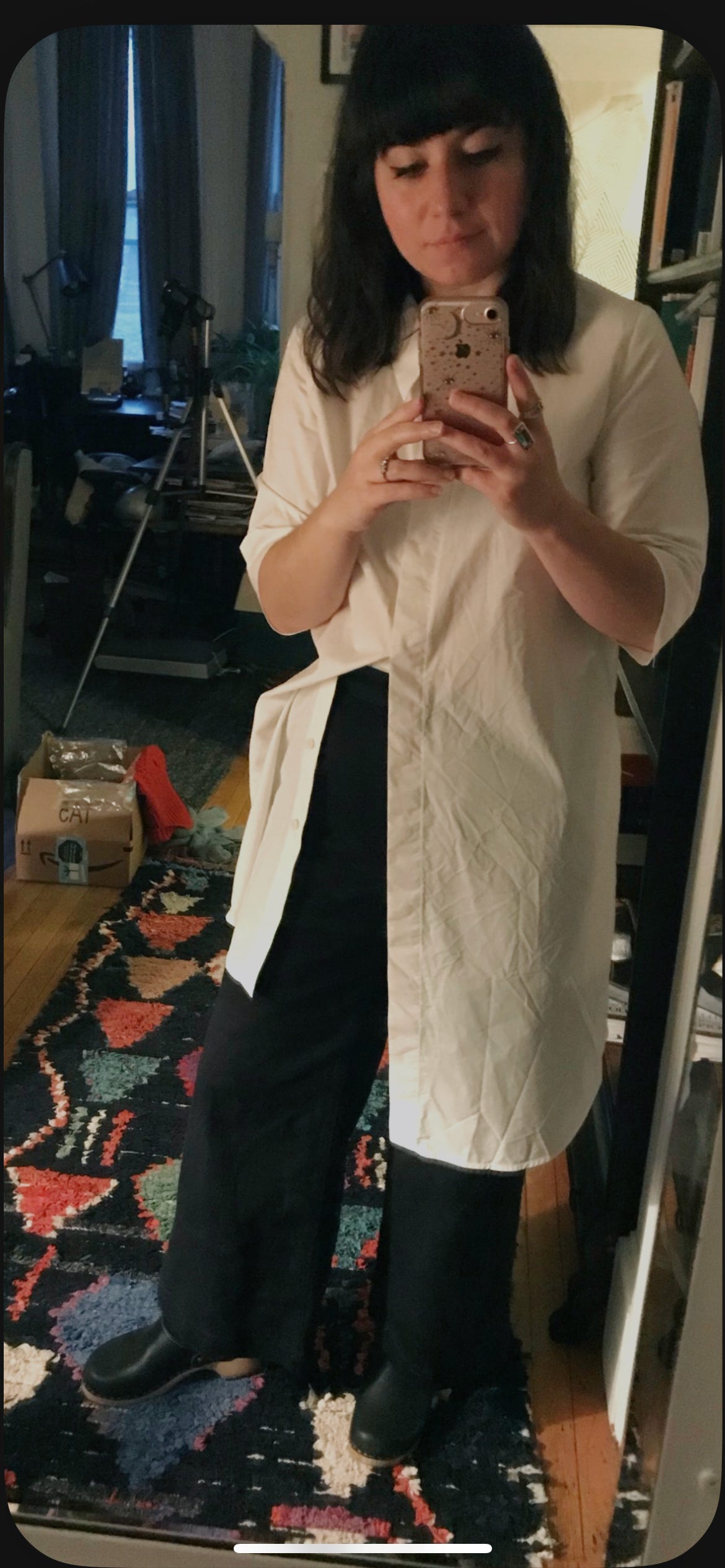
I think a lot of our contemporary Sameness begins with the Olsens and the pervasiveness of The Row to create not just clothing but “looks,” as styling can often be replicated without the hefty price tag. The above image was taken in 2019 and inspired by The Row, but replicated with pieces from Cos, Everlane, and Mia. I remember feeling a little embarrassed as I headed into work that day. Would this dress, worn as super-long, over-sized shirt read too frumpy? Would anyone get it? Now I’m asking why this outfit feels right, six years on? And I think I can credit the current Sameness we are experiencing, at least on Substack and in fashion media.
If the most recent fashion month shows are an indication of anything (I’m looking at you, New York), the eye is beginning to droop, blinking back tears waiting for something new (and imo Paris largely delivered; see also, excellent round ups of small designers in NYC by Emma Evatt and Kendall Flavin). This fatigue, though, may not necessarily because of the clothes, but because of the insatiability of the eye.
I end with this curious thought that popped into my mind this morning: After writing about the prophetic nature of getting dressed earlier this year I have to wonder—is the desire to achieve this Sameness just a pursuit of a fuller image, the image we were all born with—the Imago Dei? Perhaps the constant desire for change in fashion can be subscribed to our searching for the fuller image of God missing within us.
For now we see only a reflection as in a mirror; then we shall see face to face. Now I know in part; then I shall know fully, even as I am fully known.
1 Corinthians 13:12 NIV
Could one argue that any contemporary fashion image is THE modern image, as fashion is always looking to something new within its own time?
“Perhaps the constant desire for change in fashion can be subscribed to our searching for the fuller image of God missing within us.” So true, but you might be the only fashion writer on Substack willing, or having the understanding, to say that out loud. Going to mull on this quote….