
From the Bookshelf: 005
Louise Dahl-Wolfe: A Photographer's Scrapbook

This post is image heavy and best viewed in a browser or on the Substack app.
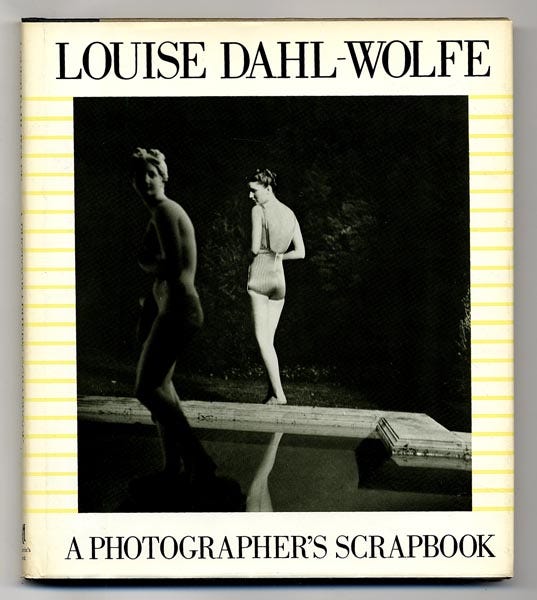
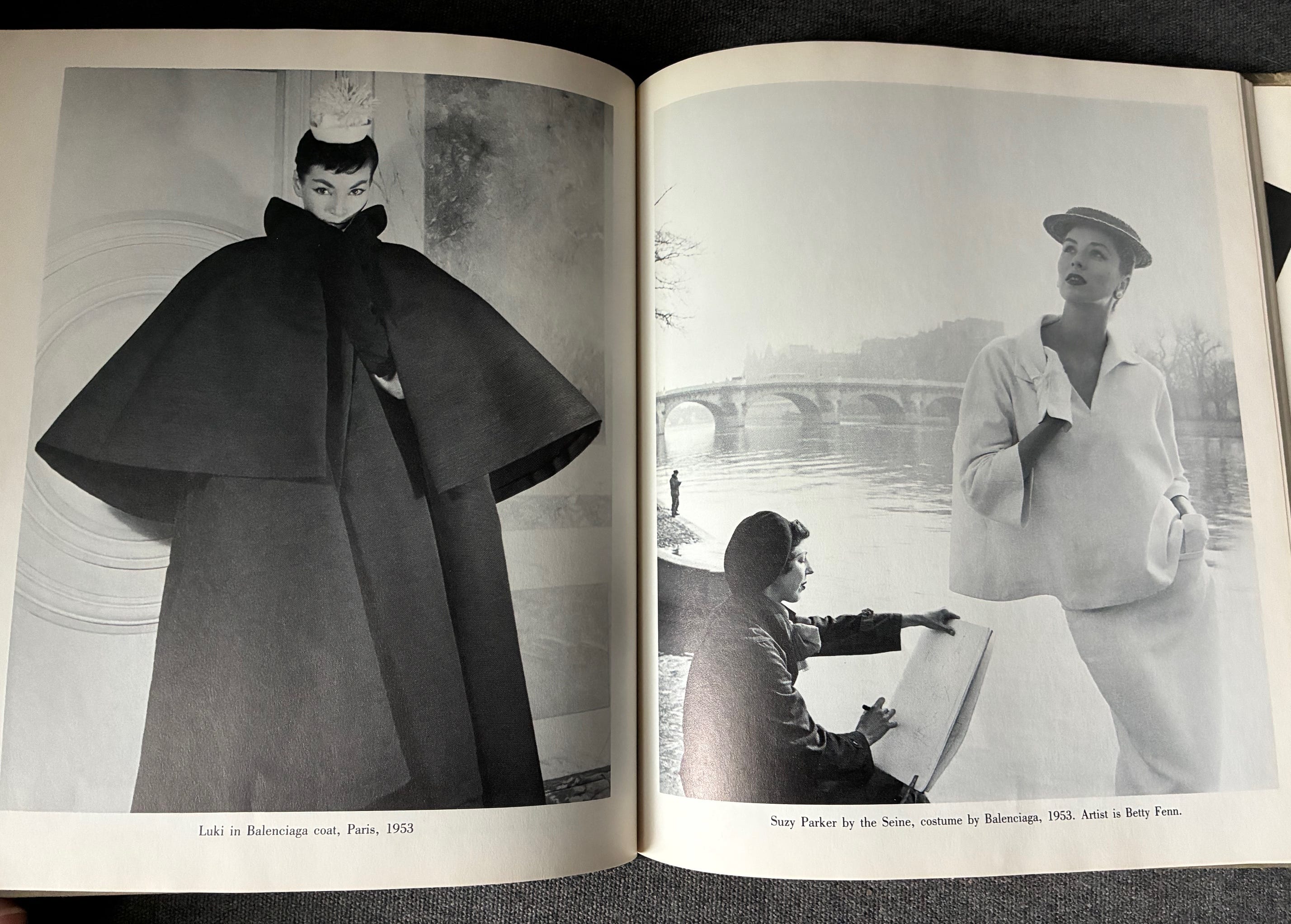
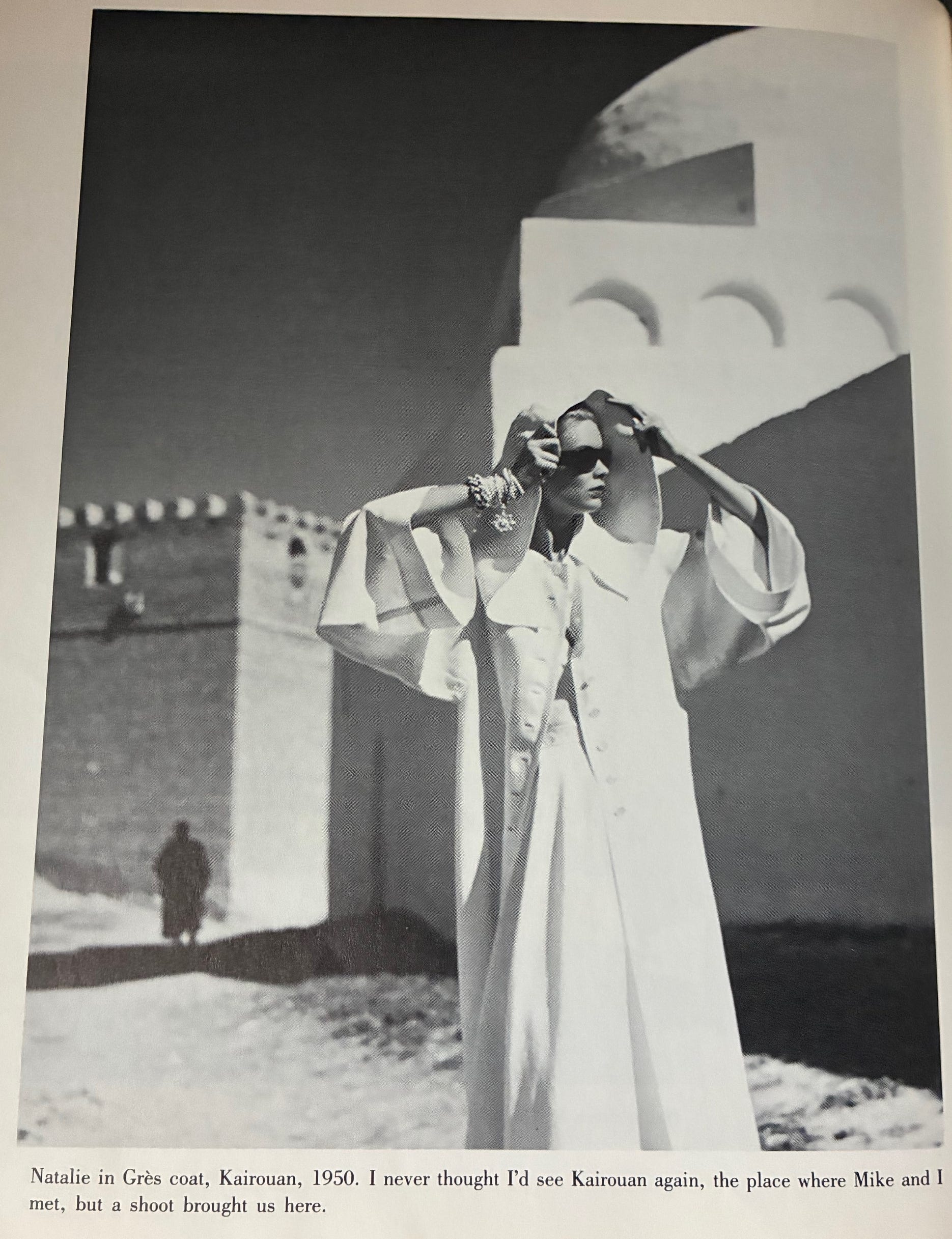
Long celebrated have been the Irving Penns and Richard Avedons of the fashion photography world, but I’d love to share a little book from my collection that shines a spotlight on the equally fabulous and successful Louise Dahl-Wolfe. Dahl-Wolfe is best known for her fashion photography work for Harper’s Bazaar from 1936-1958 in collaboration with fashion editor Diana Vreeland, under the leadership of editor-in-chief Carmel Snow. It was there that Dahl-Wolfe’s foray into color photography, a relatively new medium at the time, was perfected and utilized to great effect. Curator Lisa Hostetler, writing for the International Center for Photography, notes:
“Dahl-Wolfe was especially well-known during the infancy of color fashion photography for her exacting standards in reproducing her images. Her insistence on precision in the color transparencies made from her negatives resulted in stunning prints whose subtle hues and unusual gradations in color set the standard for elegance in the 1940s and 1950s.”
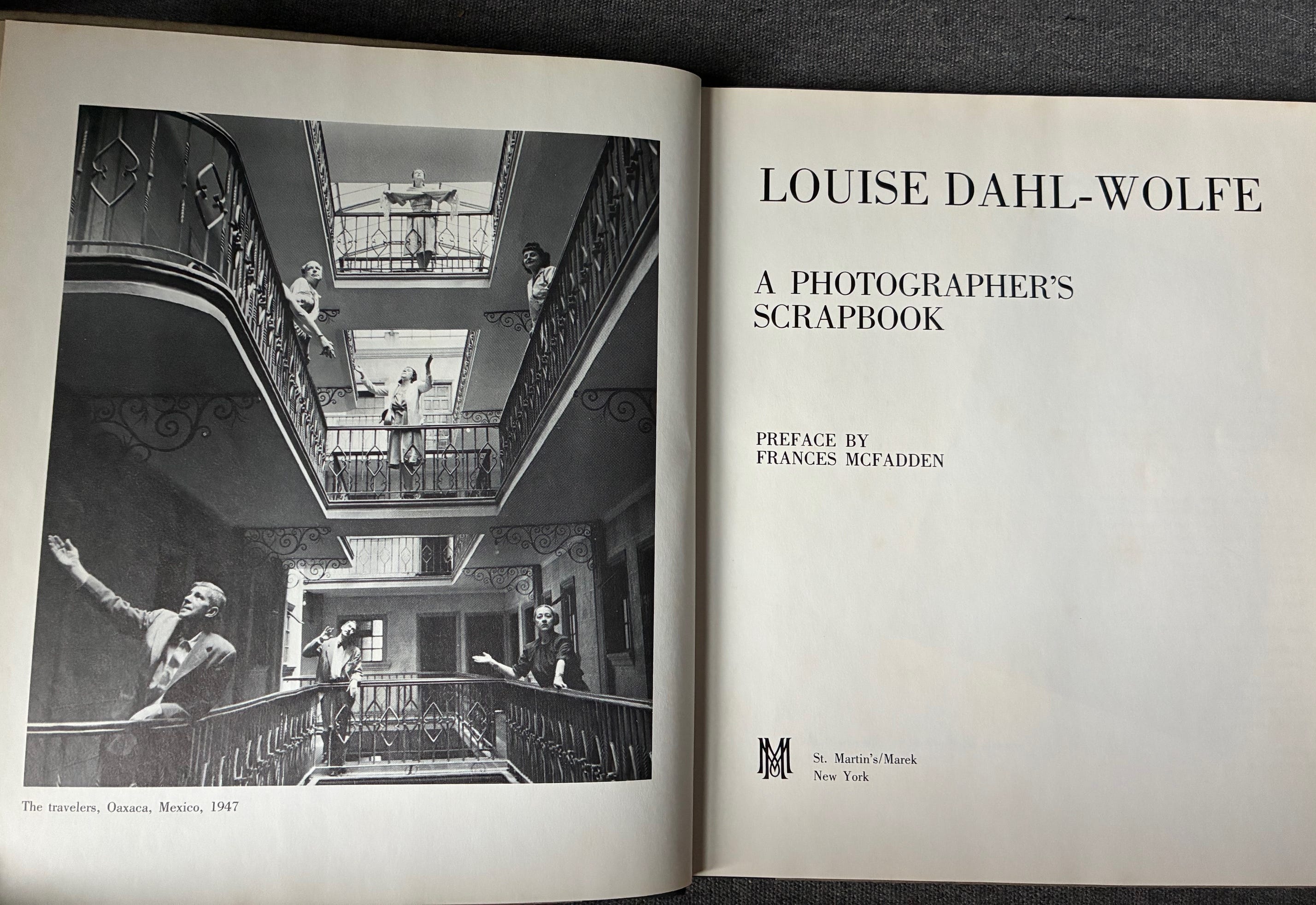
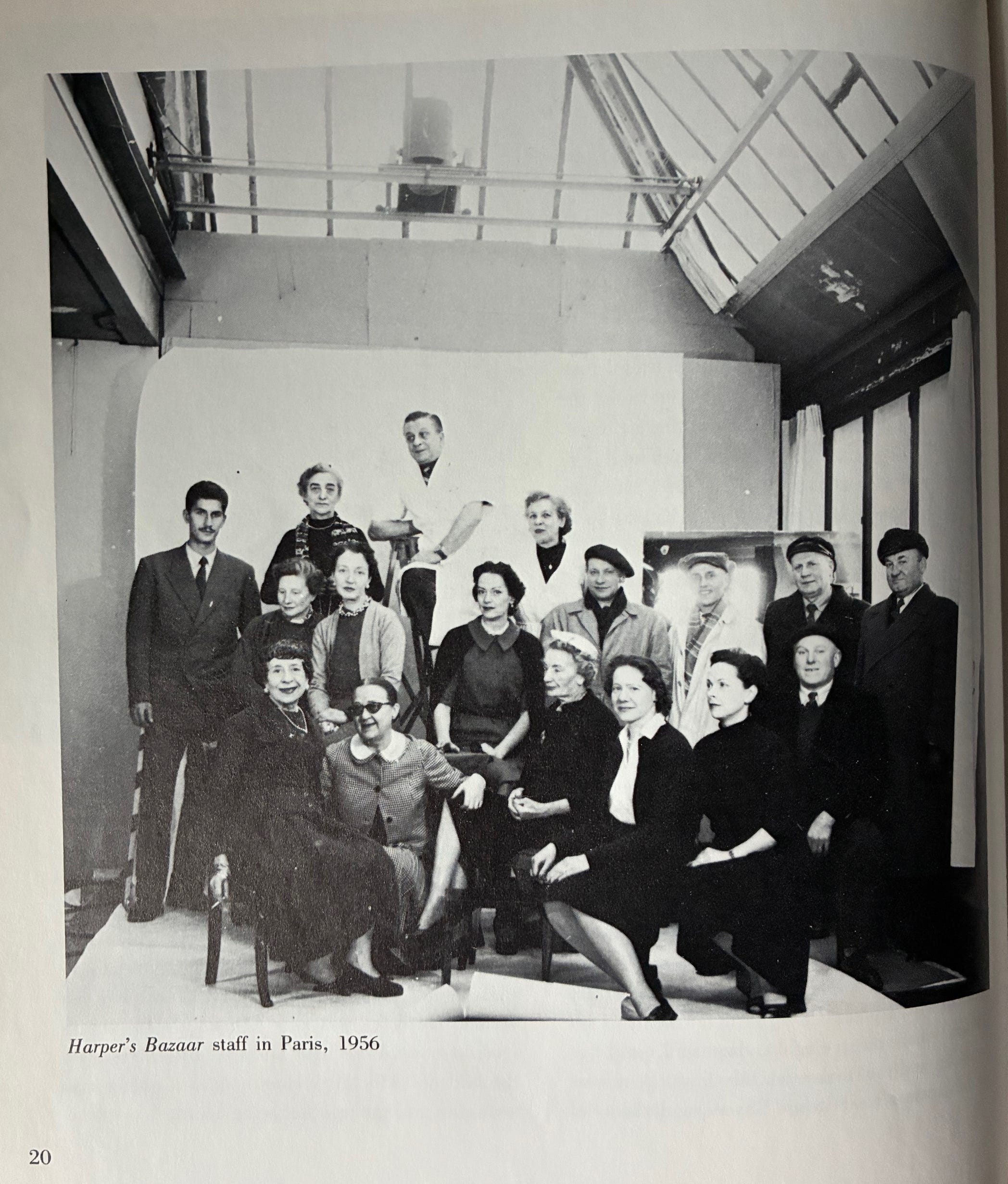
It is with great irony and some real disappointment that I must share that this photographer’s scrapbook is, for some wacky reason, printed in black and white! (?!) Despite this, the book is beautiful and delightful, akin to paging through someone’s diary, being written by Dahl-Wolfe herself. Image-heavy and including comical, gossip-laden stories that serve to invite readers into the tantalizing art and fashion worlds, it serves as a unique visual autobiography of her long, winding, and fascinating career.
Dahl-Wolfe attended art school as a young women with an interest in painting and interior design. Around 1919, a mutual friend invited her to the studio of photographer Anne Brigman and Dahl-Wolfe was immediately taken with Brigman’s haunting nudes. She resolved to buy her own camera using the funds she earned designing electric signs.
After meeting her husband, painter Meyer “Mike” Wolfe, the pair moved to New York City in 1933 and Dahl-Wolfe began working for Woman’s Home Companion magazine and submitting other work for publication in Vanity Fair. During this time in her life, Dahl-Wolfe recalled several awkward interactions she had with Condé Naste art director M. F. Agha, several of which he referenced her age in a negative light, as reason not to employ her. As she began to grow in her career, Agha came asking her to work for him at Vogue; she declined, later playfully sending a bouquet of flowers to his home with a copy of his dismissive words as the accompanying card. He promptly invited her to lunch and they remained friendly.
In 1936, Dahl-Wolfe came on board as a staff photographer for Harper’s Bazaar and served the publication for over two decades. The majority of the images in the scrapbook come from this time and are beautiful examples of the development of mid-century fashion photography.
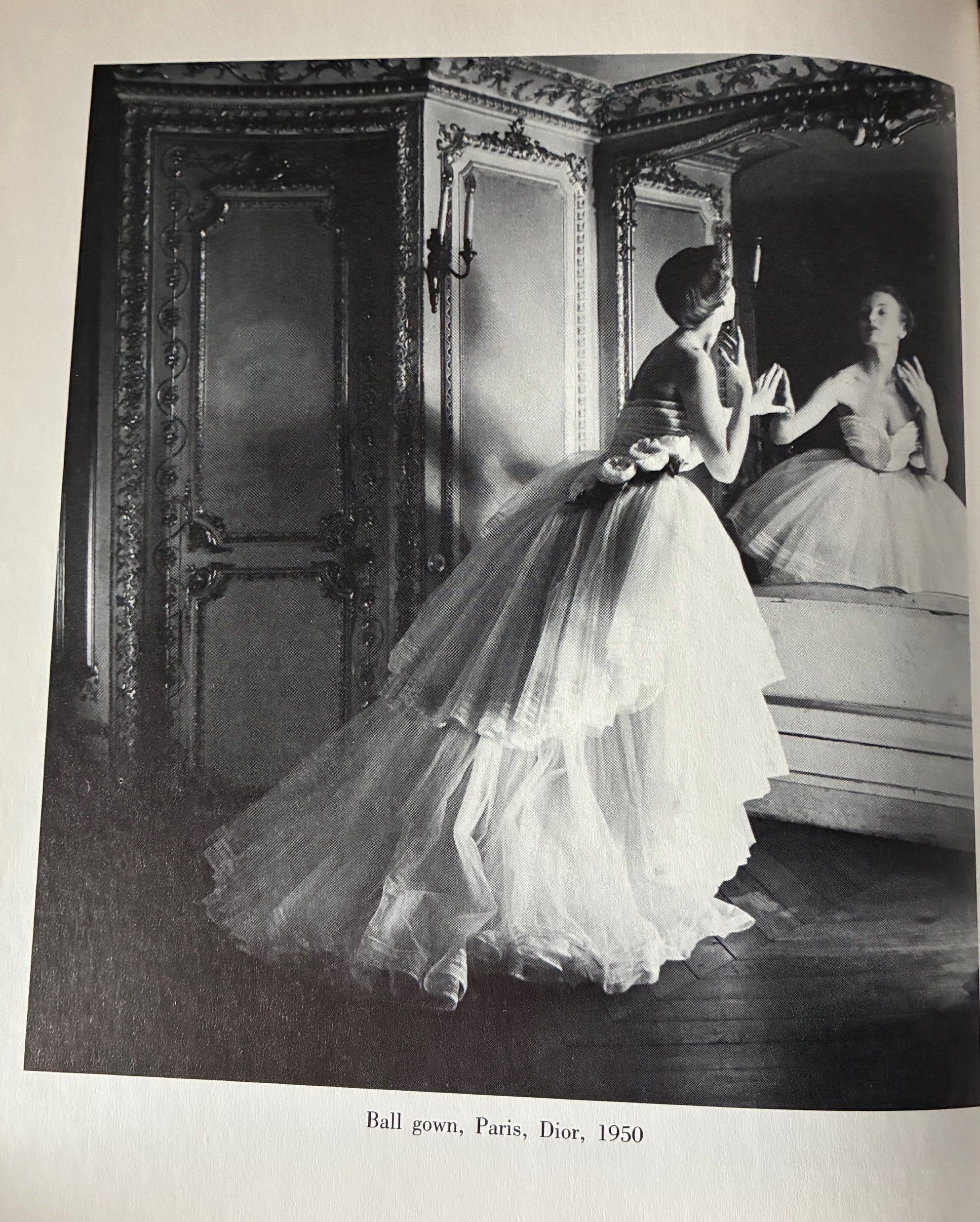
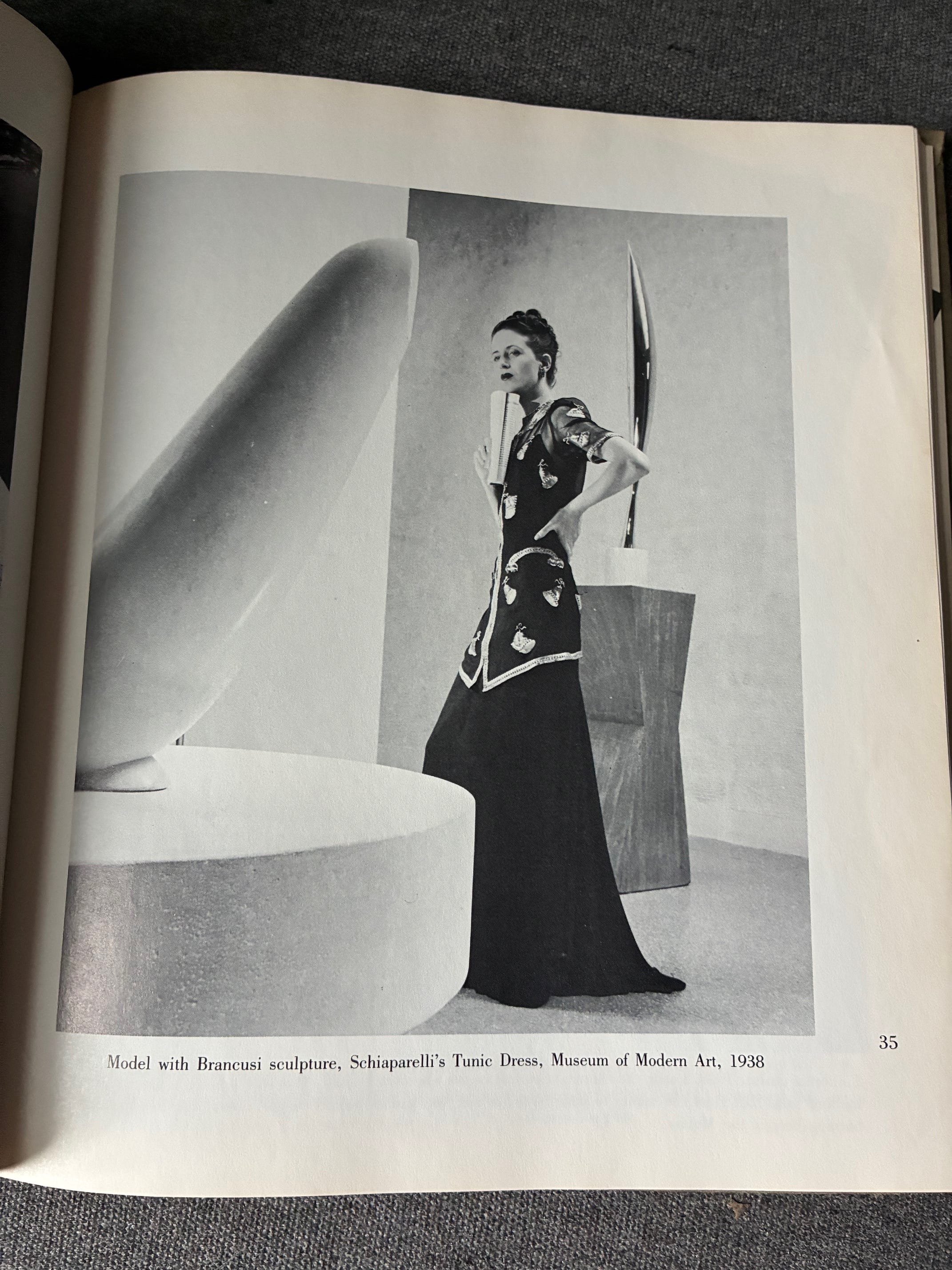
A great example of Dahl-Wolfe’s eye for shape, texture, and her appreciation of fine art.
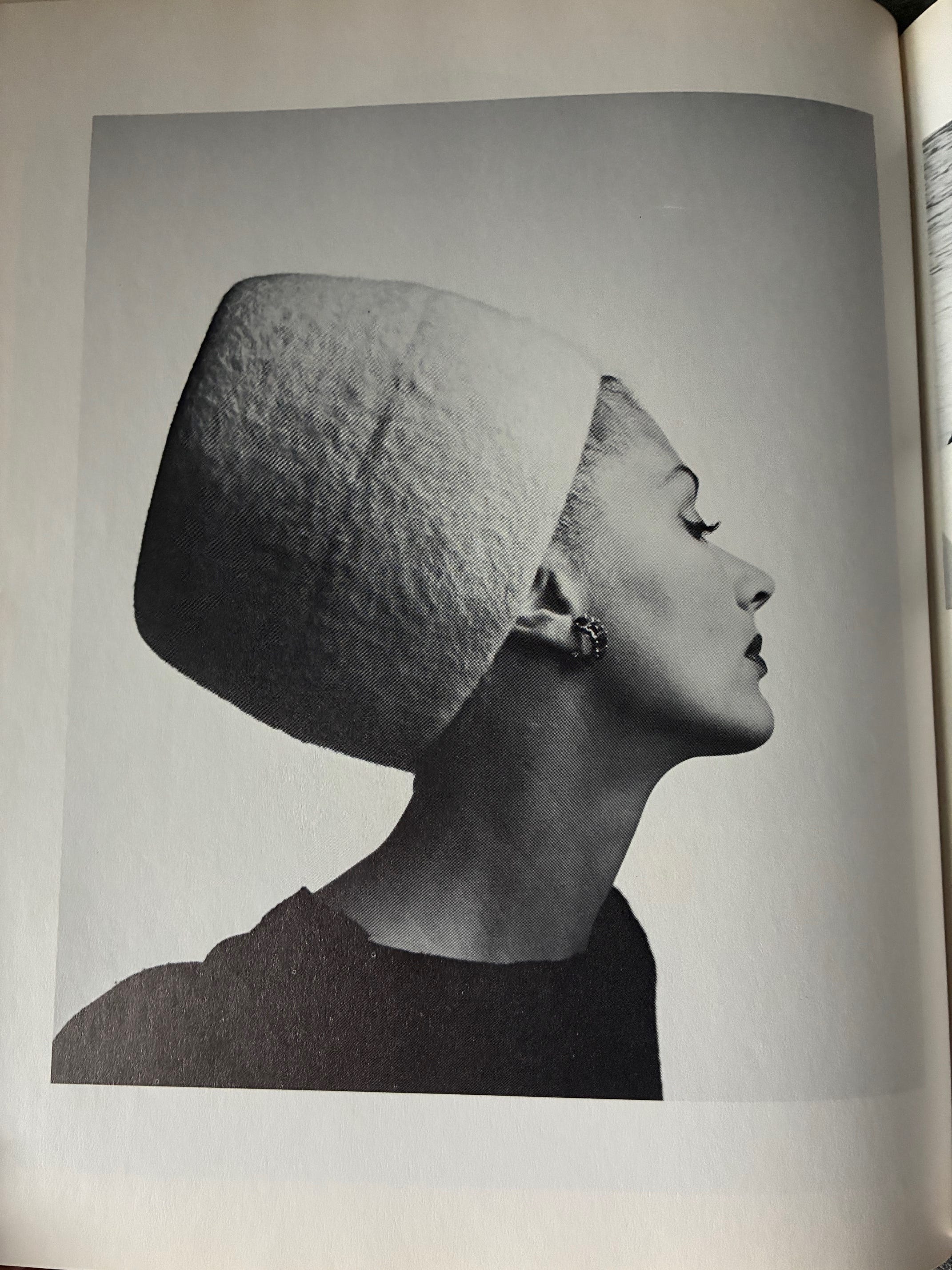
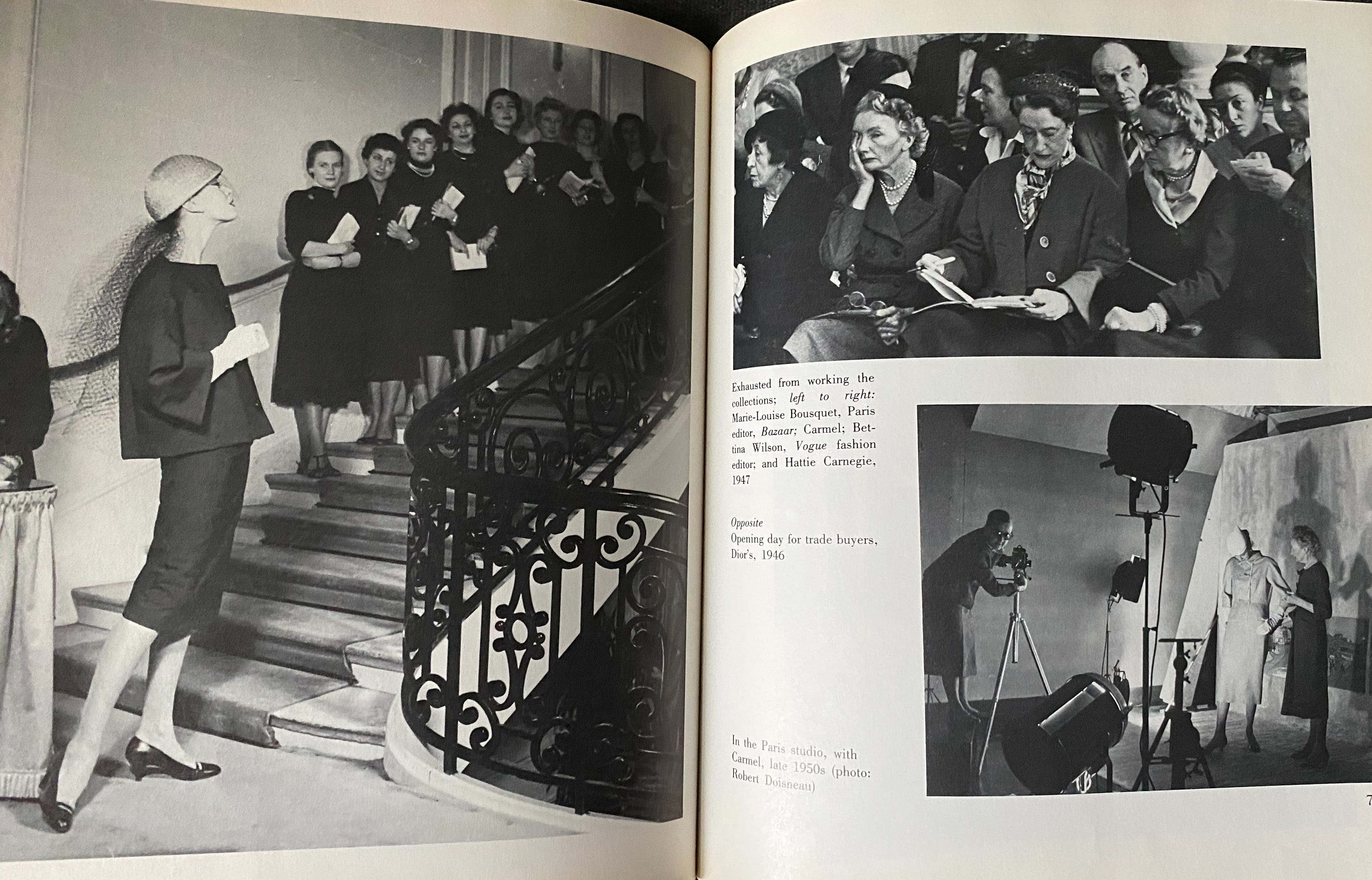
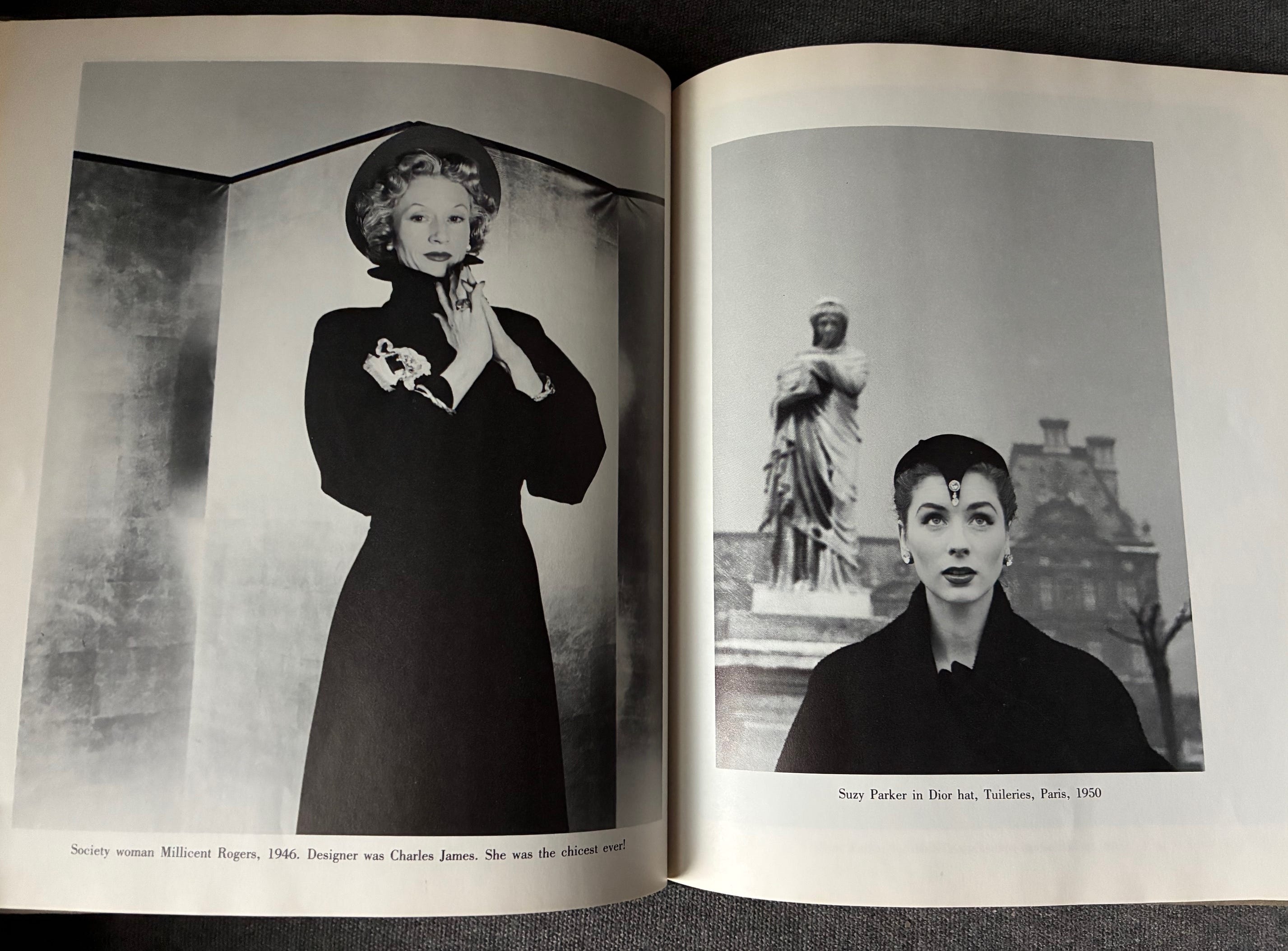


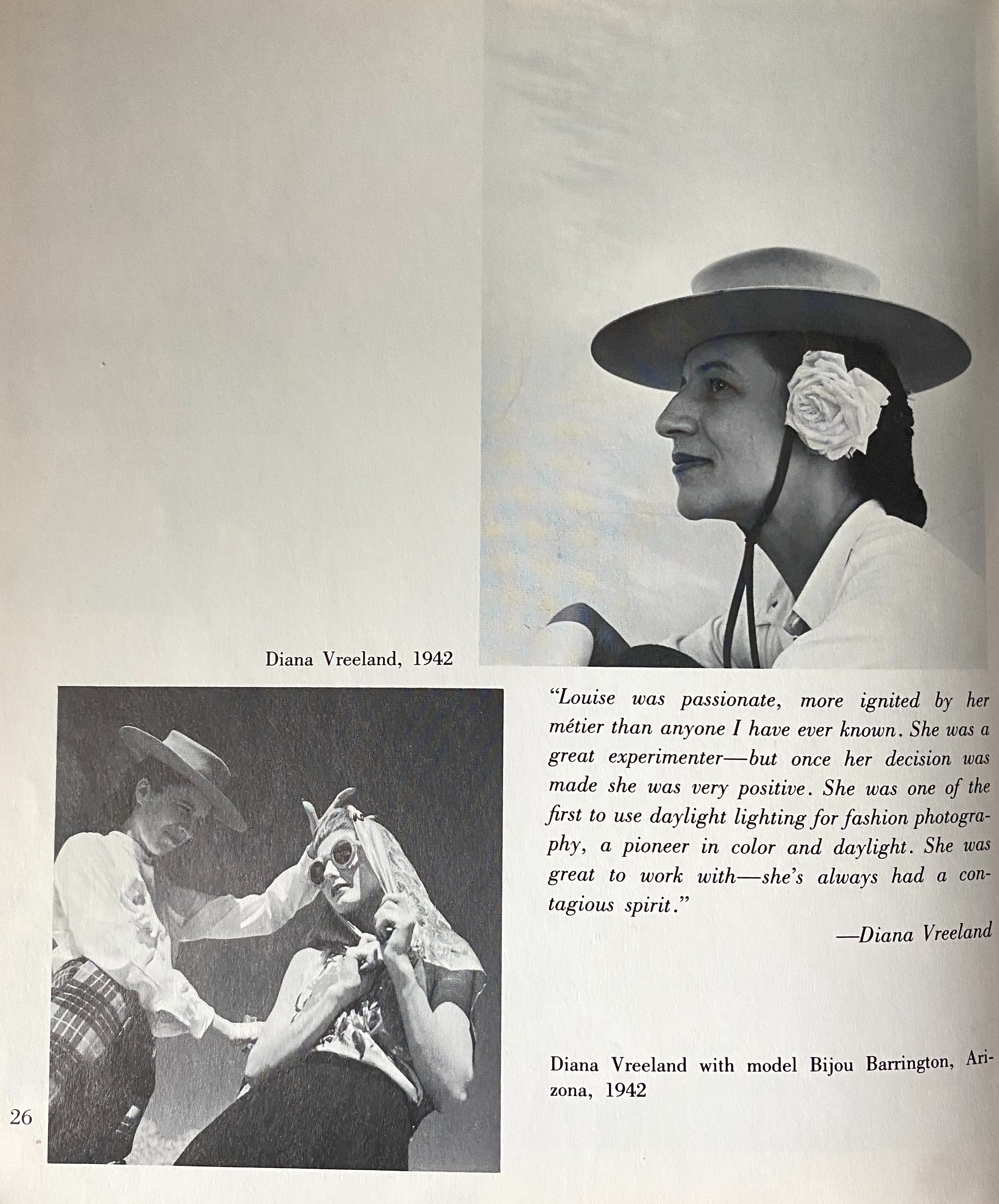
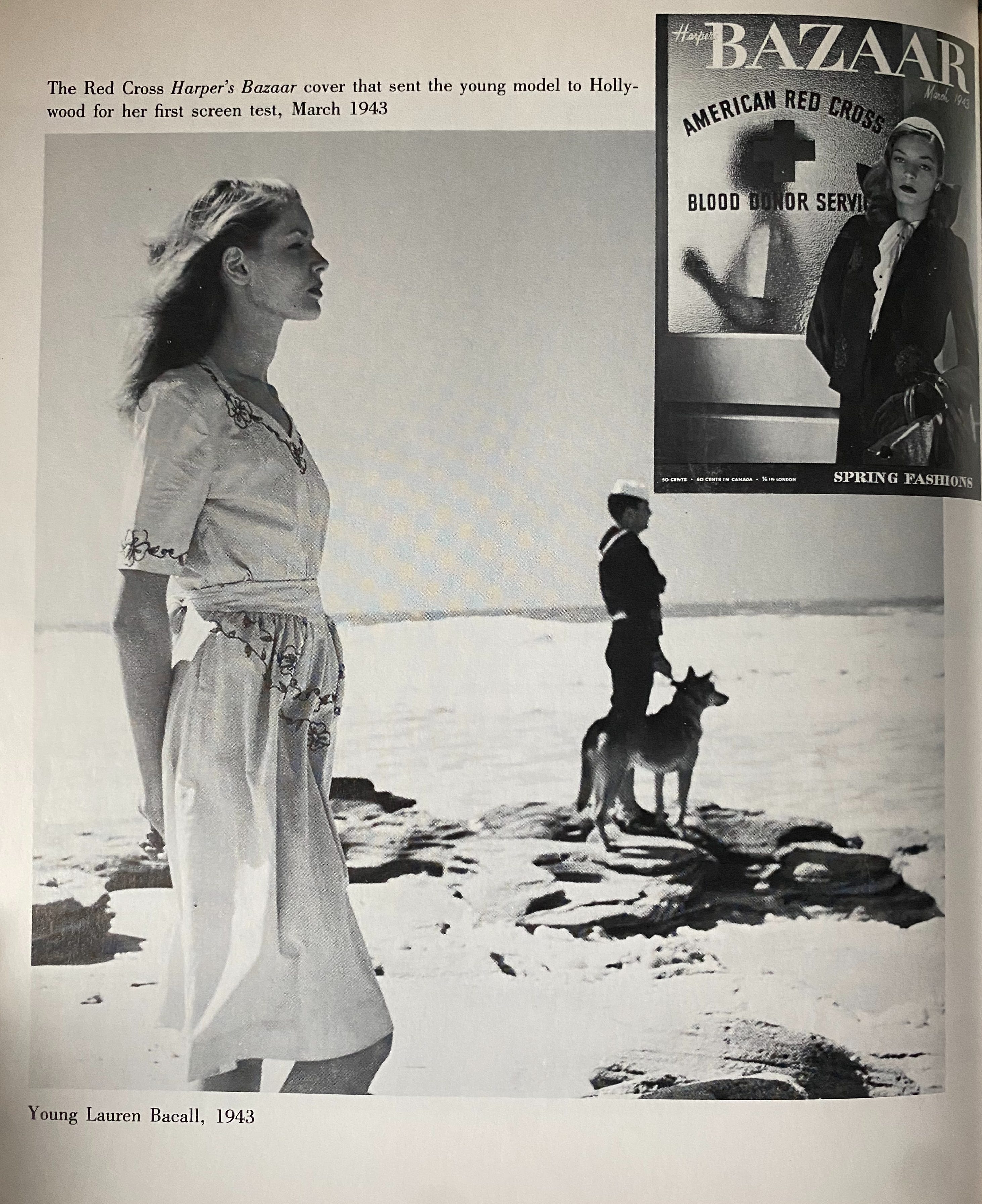
Dahl-Wolfe worked closely with legendary fashion editor Diana Vreeland while at Harper’s Bazaar. The pair is responsible for the 1943 cover of a young and then-unknown Lauren Bacall.1 The cover would ensure a screen test for the teen, catapulting her to movie stardom.
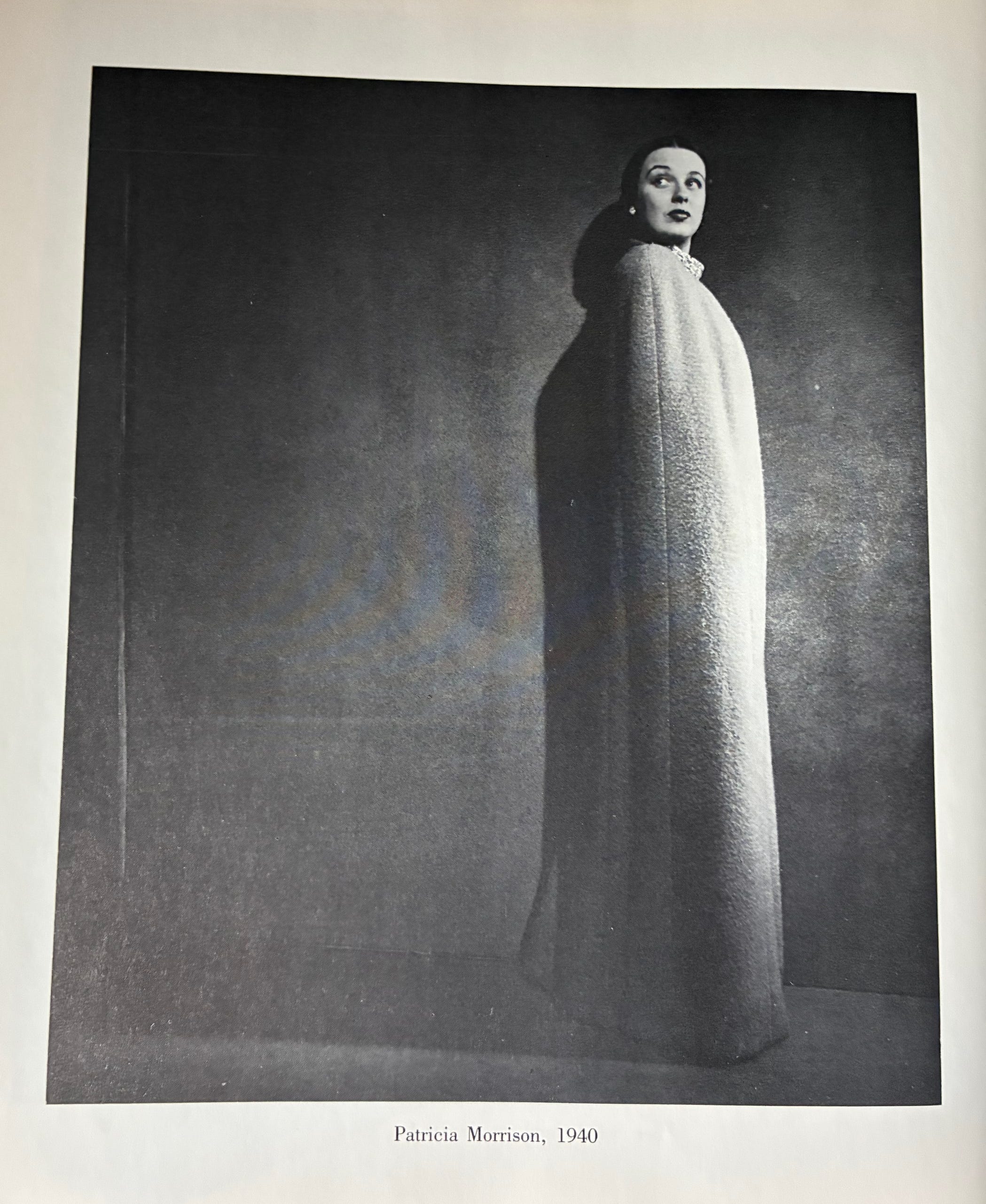
Dahl-Wolfe stated that left to her own devices she would have been a portrait and still life photographer. At the suggestion of a friend she began photographing fashions in a showroom for a local newspaper. The idea of fashion photography was initially a bit foreign, and she noted that up until that point fashions imagery had been captured through illustration by fine artists.

As that skill set began to wane in the 1930s, photography slowly started to fill the gap. Her skill at capturing a solo subject speaks to her training in still life and portraiture, best displayed in the Designer section of the book, where she captured her subjects with a knack that is both curious and exuberant.


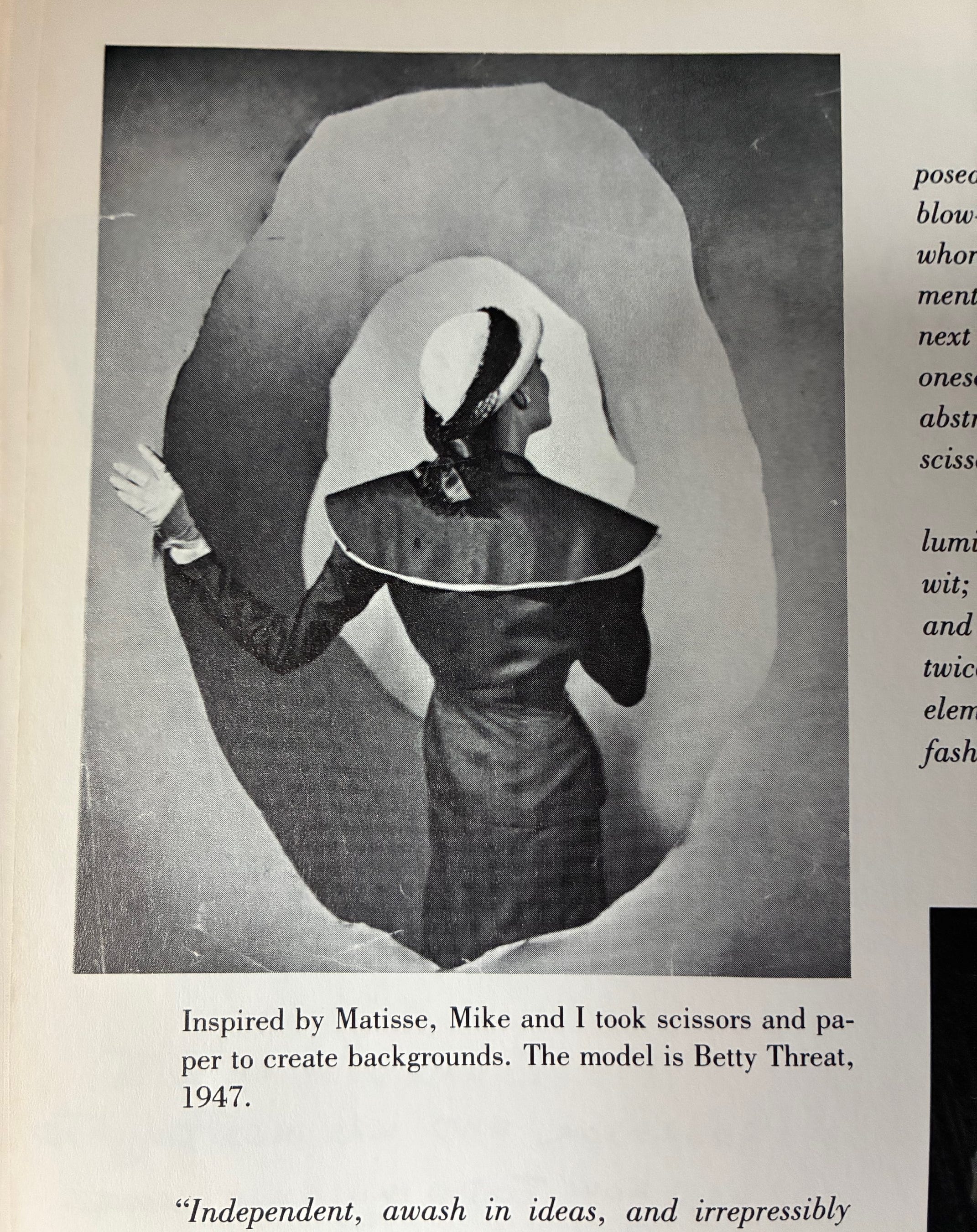
I think one of the most special aspects of Dahl-Wolfe’s scrapbook is the documentation of her close working relationship with her husband. Mike would often collaborate with her on photo backgrounds, creating surreal set designs on paper with paint or scissors. A portion of the book is dedicated to her long and happy relationship with him.


Dahl-Wolfe ends the scrapbook with these words, a succinct and contented end to her story (and one that feels relevant for today):
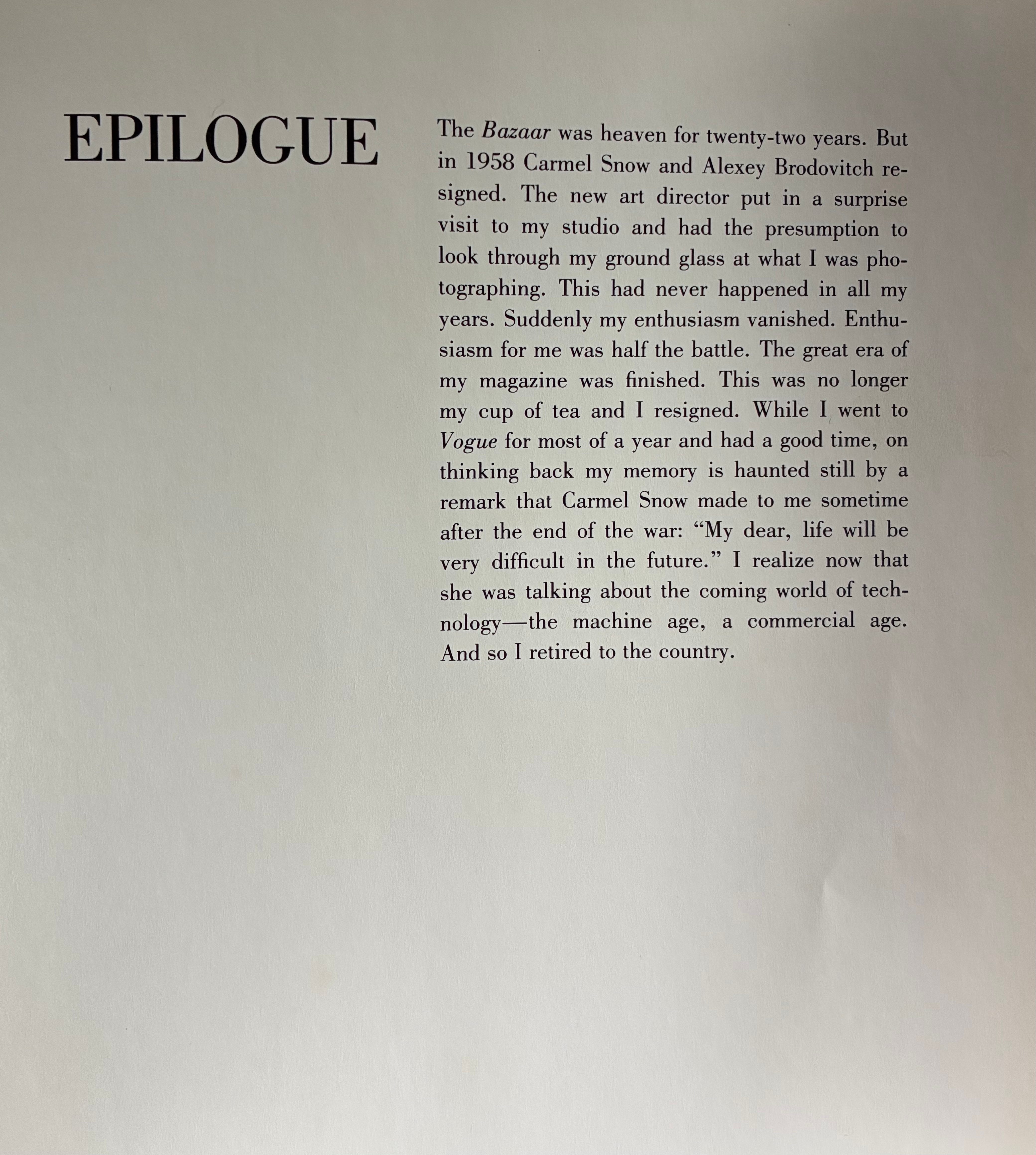
“And so I retired to the country.”
You may also like:


Ooh! These are dreamy. The movement and the contrast